Decluttering the home is a task often consigned to another day, so here are some experts who share their top decluttering tips, room by room.
Kitchen
Organise under-sink cupboards. To prevent chaos under the sink, Poppy Duffree of Organised Interiors recommends making use of the cupboard door by adding adhesive hooks or clips to store cleaning gloves and tea towels. An expandable under-sink organiser can also help maximise space around the U-bend. “Organisation is key here as the area is often awkwardly shaped,” Duffree says. If one side of the cupboard is full height, she suggests using large stackable drawers for cloths, sponges and other cleaning supplies, while tension rods can create extra hanging space for spray bottles.
Keep countertops clear. After reorganising your kitchen, Hester Van Hien of Tidylicious says it’s essential to keep worktops as clear as possible. “You can start preparing meals without having to move anything out of the way,” she explains. If you do choose to keep items on display, Van Hien suggests grouping them together on a tray to create a neater look and make cleaning easier.
Living Space
Clear the floors. “Nothing screams clutter more than messy floors,” says Mimi Bogelund of The Organised Home and Life. The floor isn’t a storage space, so everything should have a proper home. Bogelund suggests using attractive baskets to store pet toys, electronics, throws and reading material. She favours seagrass belly baskets from Ikea, but notes that The Basket Company, TK Maxx and Dunelm also offer good-value options.
Create a transition zone. Laura Haddy of Clear the Chaos recommends setting up a “transition zone” near the front door — a small shelf, hook or basket — for items you use every day, such as school uniforms or parcels to send. “It makes things easy to grab while reducing morning stress and preventing clutter from building up,” she says.
Use a storage turntable. Make a storage turntable — a modern take on the lazy Susan — your new kitchen essential. Siân Pelleschi of Sorted!, and president of the Association of Professional Declutterers and Organisers, calls it a staple for tackling kitchen chaos. “It’s ideal for cupboards where items are hard to reach, and perfect for storing condiments on the top shelf of the fridge,” she says. Ikea’s Klippkaktus model is £9.
Bedrooms
Master the KonMari fold. Marie Kondo’s KonMari tidying method includes a simple folding technique that turns clothes into neat, space-saving rectangles, rather than messy stacks or piles on a chair. The method involves folding each side of a garment in towards an imaginary centre line, folding it lengthways while leaving a small gap at the bottom, then folding it in half or into thirds widthways so it can be stored upright and wrinkle-free.
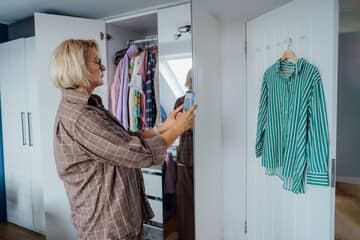
Use one type of hanger. Victoria Nicholson of My Wardrobe Zen recommends sticking to a single style of clothes hanger to streamline your wardrobe. Slim flocked hangers are her go-to, as they save space and stop clothes slipping off. “You may want a few sturdier hangers for suits and coats, but for most items the flocked version works best,” she says. As a bonus, dry cleaners will usually recycle wire hangers, and charity shops are often happy to take unwanted spares.
Declutter in sections. Jenn Jordan of Orjenise suggests tackling your wardrobe in manageable categories — T-shirts, skirts, trousers, shirts and jackets, for example — rather than trying to do everything at once. If it still feels overwhelming, break it down further by clothing type or colour. “It makes it easier to pause and regroup, and helps you spot duplicates,” she says. If deciding what to let go of feels tricky, Jordan advises starting with the items you know you want to keep and working from there.
Store shoes properly. Nicola Rodriguez of @essexhousedolly says poor shoe storage often leads to forgotten footwear — especially when pairs are hidden in boxes, piled on the floor or stuffed into baskets. After a shoe declutter, she recommends storing out-of-season styles in large plastic boxes in the loft or garage if space is tight. Shoe holders can help maximise vertical space, while clear, stackable boxes make it easy to see exactly what you own. An ottoman storage bed can also be a practical solution for keeping shoes protected and accessible.
Bathrooms
“Spend a day gathering all the toiletries and cosmetics you have squirreled away — samples, hotel shower gels and advent calendar prizes — and start using them up,” Jenn Jordan says. Bid adieu to any unwanted sealed products by donating to a hygiene or beauty bank in branches of Boots and Superdrug.
If there are things to get rid of, Esther Walker has some great advice whether it be selling, donating or recycling.
• Before you embark on your clear-and-sort, visit your local recycling depot and make a list of all the items they will take. I promise you will not know off the top of your head when you are standing knee-deep in junk pulled from The Shelves, ready to emit a primordial bellow of despair.
• If you have a lot of books to get rid of, download the Ziffit app, which will pay token sums for second-hand books, which is better than nothing. The app has a little barcode scanner, which goes “beep!” and is quite fun to use. It will collect the books from your doorstep.
• The nationwide service iCollect Clothes will also collect anything charity shop-worthy from your home.
• Terracycle specialises in recycling the unrecyclable, such as cat food pouches and crisp packets. Buy a box online, fill it and then use the returns label to post it back.
• If you absolutely need to dump everything into black rubbish bags and have them taken away, Litta is a very smart junk removal service that is as committed as I am to sending as little as possible to landfill. Expensive, but some would say worth it.
Cookies are small text files that can be used by websites to make a user's experience more efficient. The law states that we can store cookies on your device if they are strictly necessary for the operation of this site. For all other types of cookies we need your permission. This site uses different types of cookies. Some cookies are placed by third party services that appear on our pages.
Necessary cookies help make a website usable by enabling basic functions like page navigation and access to secure areas of the website. The website cannot function properly without these cookies.
Marketing cookies are used to track visitors across websites. The intention is to display ads that are relevant and engaging for the individual user and thereby more valuable for publishers and third party advertisers.
Preference cookies enable a website to remember information that changes the way the website behaves or looks, like your preferred language or the region that you are in.


You need to sign up or be logged in to leave a comment.