


This website uses cookies to improve your experience. We'll assume you're ok with this, but you can opt-out if you wish. Read More

August 5, 2026
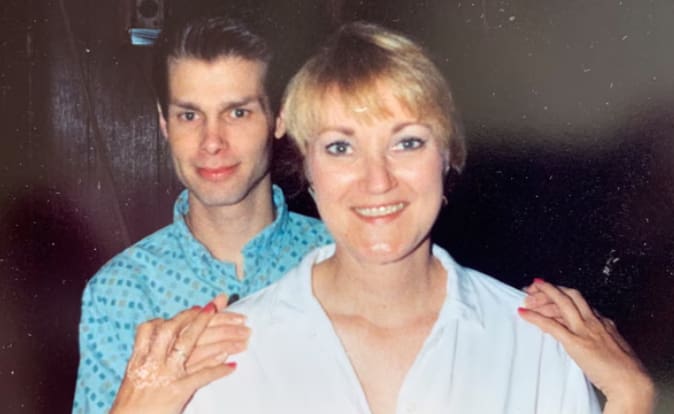
The remarkable story of the woman who offered comfort to those rejected by society.
A true story is one of the most powerful tools for understanding and influencing human experience. It can change how we regard oursleves and others. This is why we are publishing a story of the week and starting with that of a quite remarkable woman, Ruth Coker Burns.
This is what she did.
In 1984, in Little Rock Arkansas, an event occurred that was to change the course of a 25-year-old woman’s life and that of many others.
Ruth Coker Burns was visiting a friend in hospital when she walked by a door with the word “biohazard” written across it and behind which she could hear a weak voice saying;
“Help me”.
The nurses told her they never liked entering the room and would draw straws to decide who did. Ruth entered the room and lying on the bed was an emaciated man clearly close to death whispering that he wanted his mother.
Ruth returned to the nurse’s station and was told he had the “gay cancer” and dismissively gave her his mother’s phone number. When she rang his mother, she was told:
“My son died when he told me he was gay”
Ruth returned to the room and not knowing really what to do, took the young man’s hand.
“Oh, Mama, I knew you would come”
Ruth stayed with Jimmy for thirteen hours until he died, all the while pretending to be his mother.
At the time, sex between men was illegal in Arkansas. Funeral homes refused to handle those who died of Aids. Word spread about what had happened that day and a few weeks later a nun from a Catholic hospital called. They had an Aids patient and were not equipped to deal with him, could Ruth help?
Again, Ruth sat with him until he died and so began a decade dedicated to helping these victims. Sufferers, rejected by their families, would seek refuge with Ruth. She arranged housing and ransacked supermarket dumpsters at dawn for food for them. She enlisted the help of the governor of Arkansas, Bill Clinton, who authorised food banks to help her.
Ruth had been left cemetery plots by her grandmother and when relatives refused the ashes of those afflicted, this became their burial site.
The aids victims were not the only ones to be ostracised. The church ejected Ruth from its finance committee, her daughter Alison stopped being invited to children’s parties and the Ku Klux Klan twice left burning crosses on her lawn. As she says “It was like I was contagious”
Perhaps what drove Ruth was that her father died when she was five and she was abused by her mother who had mental health issues. Her mother often left her at an orphanage, so like those she looked after, she too had suffered abandonment.
Life was hard for Ruth. So many of the sufferers she befriended and loved died and in 1990 when care for those with HIV/Aids slowly became more professionalised and funding more readily available, she became obsolete. She applied for jobs with some of the campaign, advocacy and care groups that sprang up, but got none. In 2010 she had a stroke and had to learn to walk and talk again.
Her story is an inspiration, especially today when prejudice and misinformation are rampant and being ostracised is common place in society. Her book All the Young Men is well worth reading as I discovered.
Think for a moment how easy it would have been for her to ignore what she witnessed in that hospital. How she stood up to those who showed no compassion or understanding of what was termed “The Gay Plague”.
Do please let us know of a story you would like to share be it personal or one you have heard of. We’re better off when we share.
You need to sign up or be logged in to leave a comment.