


This website uses cookies to improve your experience. We'll assume you're ok with this, but you can opt-out if you wish. Read More

September 18, 2026
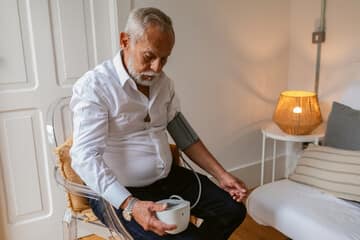
Learn what you should do to reduce the chance of a stroke.
As we get older so the risk of a stroke increases, especially when we move into our 70’s and 80’s. Although age itself increases our risk, getting older doesn’t mean a stroke is inevitable. There are several things we can do to reduce the risk — and some are surprisingly simple.
1. Know your blood pressure
If you do just one thing, make it this.
High blood pressure is a major risk factor for stroke, yet it often has no obvious symptoms. That’s why it’s sometimes described as a “silent” problem.
Have yours checked regularly. You can do this at many pharmacies, at your GP surgery or with a reliable home blood-pressure monitor.
If you’ve been prescribed blood-pressure medication, take it as directed even when you feel perfectly well.
2. Check your pulse occasionally
An irregular heartbeat called atrial fibrillation (AF) becomes more common as we get older and increases the risk of blood clots that can cause a stroke.
Every so often, feel your pulse at your wrist. It doesn’t have to beat like a metronome, but if it repeatedly feels very irregular, unusually fast or noticeably different from normal, mention it to your GP.
Palpitations, breathlessness, dizziness or unusual tiredness can also accompany AF — although some people have no symptoms at all.
3. Walk more
You don’t need to become a gym enthusiast.
Walking is one of the simplest ways to improve cardiovascular health. It can help with blood pressure, weight, blood sugar and cholesterol — all factors associated with stroke risk.
Rather than obsessing about 10,000 steps, start from where you are. If you usually manage 3,000 steps, try gradually moving towards 4,000 or 5,000.
The best exercise is often the exercise you’ll actually keep doing.
4. Be careful with salt
Too much salt can contribute to high blood pressure.
The surprising problem isn’t necessarily the salt shaker. A lot of the salt we eat is already hidden in everyday foods such as bread, processed meats, ready meals, sauces, soups and snacks.
Check food labels and compare similar products. Small changes made every day can add up.
5. Eat more of the foods that protect your heart and blood vessels
There’s no single “anti-stroke superfood”.
Think instead about your overall diet: plenty of vegetables and fruit, beans and pulses, wholegrains, nuts, seeds and other fibre-rich foods, alongside appropriate sources of protein.
Try replacing some heavily processed foods rather than attempting an impossibly perfect diet.
6. Know your cholesterol
High cholesterol can contribute to fatty deposits building up inside the arteries.
The problem is that you can’t feel high cholesterol.
A blood test can tell you your levels, while your doctor can assess these alongside your age, blood pressure, smoking history and other cardiovascular risk factors.
If you’ve been prescribed a statin or another cholesterol-lowering medicine, don’t stop taking it without discussing it with your doctor.
7. Keep an eye on your blood sugar
Type 2 diabetes increases the risk of cardiovascular disease and stroke.
Again, you may not realise there’s a problem.
If you’re invited for an NHS Health Check, take advantage of it. Depending on your circumstances, your GP may also recommend testing your blood sugar.
If you already have diabetes, keeping it well controlled is particularly important.
8. If you smoke, stopping really matters
It’s never “too late” to stop smoking.
Smoking damages blood vessels, contributes to narrowing of the arteries and makes cardiovascular disease more likely.
Stopping smoking is one of the most significant changes a smoker can make for their long-term health — whatever their age.
9. Don’t let alcohol quietly creep up
A glass of wine with dinner can gradually become two, and an occasional drink can become an everyday habit.
Regularly drinking too much alcohol can raise blood pressure and increase the risk of cardiovascular problems.
In the UK, the recommendation is not to regularly drink more than 14 units of alcohol a week, spread over three or more days if you drink that amount.
Alcohol-free days during the week can make it easier to keep track.
10. Know FAST — it could save a life
Reducing your risk is important. Recognising a stroke when it happens is equally important.
Remember FAST:
F — Face: Has one side of the face suddenly drooped? Can the person smile normally?
A — Arms: Can they raise both arms and keep them there? Is one arm weak or numb?
S — Speech: Is their speech suddenly slurred, confused or difficult to understand?
T — Time: Call 999 immediately if you notice any of these signs.
Other sudden symptoms can include weakness or numbness on one side of the body, loss or blurring of vision, confusion, dizziness, problems with balance or a severe headache.
And one rule everyone should remember
Never wait to see if stroke symptoms get better.
Sometimes symptoms disappear after a few minutes. This could be a TIA — often called a mini-stroke.
It may feel like the danger has passed, but a TIA can be an important warning that a full stroke could follow.
If someone develops FAST symptoms, call 999 — even if those symptoms subsequently disappear.
You need to sign up or be logged in to leave a comment.