


This website uses cookies to improve your experience. We'll assume you're ok with this, but you can opt-out if you wish. Read More

July 10, 2026
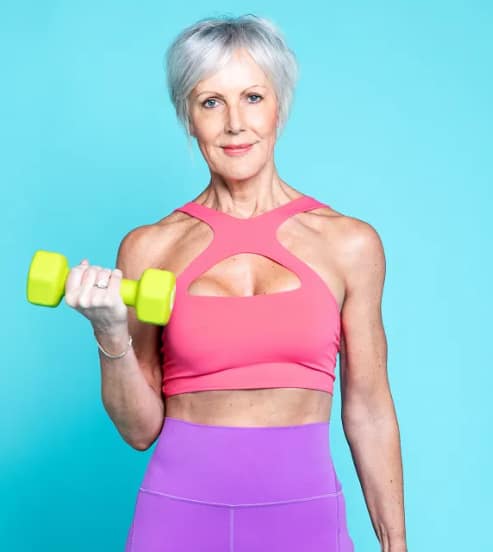
Learn how a 60-year-old embraced fitness by setting a challenge.
It’s Never Too Late to Get Fit
By Fiona Lambert
You can become fitter and stronger at any age. The hardest part isn’t your age—it’s taking that first step.
I certainly wasn’t a natural athlete. I was never sporty at school, and I’ve never considered myself a gym fanatic. But just before my 60th birthday, I set myself a challenge: to get into the best shape of my life.
Walking into a gym full of people lifting heavy weights can feel intimidating. It certainly did for me. So, I started small.
My first workouts were just 15 minutes long and used nothing more than my own body weight. Press-ups against a kitchen counter or even a wall are a perfectly good place to begin. You don’t need expensive equipment or hours of free time—you simply need to start where you are.
That first step has changed far more than my fitness.
Since sharing my journey, I’ve heard from countless women in their sixties who tell me that seeing someone like them embrace strength training gave them the confidence to do the same. The most rewarding part is hearing how quickly they begin to feel the difference. Many notice they’re stronger, more energetic and more confident within just four weeks.
You don’t have to be naturally sporty to transform your health. You just have to believe that it’s still possible—and give yourself permission to begin.
You Can’t Out-Exercise a Bad Diet
When you’re younger, your body is often more forgiving. A faster metabolism and naturally higher muscle mass mean you can get away with eating poorly and still feel relatively fit.
That changes with age.
Now, what I eat is just as important as how I train. Nutrition isn’t about chasing the latest diet—it’s about giving my body the fuel it needs to stay strong, healthy and active.
One of the biggest lessons I’ve learned is that you simply can’t out-exercise a poor diet. No amount of running, lifting or cycling will compensate for consistently eating the wrong foods—or not eating enough.
As we get older, protein becomes essential for maintaining muscle, healthy fats support overall wellbeing, while fibre and prebiotic-rich foods help keep the gut healthy. Undereating can be just as damaging as overeating because, when calories are too low, the body doesn’t just lose fat—it also loses precious muscle.
Exercise provides the stimulus, but good nutrition provides the building blocks. You need both if you want to stay strong, capable and independent in later life.
The One Thing I Do Every Day? Walk.
If there’s one habit, I’d recommend to almost anyone, it’s walking.
It’s one of the most overlooked forms of exercise, yet it’s accessible, free and incredibly effective. Walking helps maintain fitness, supports fat loss and, for me, provides valuable time to clear my head.
Don’t get hung up on reaching 10,000 steps. If you’re currently walking 3,000 a day, increasing that to 5,000 is real progress. Small improvements soon add up.
I look for opportunities to move throughout the day. I’ll walk to the local shop instead of driving. Rather than leaving things at the bottom of the stairs until later, I simply carry them up as I go. These little decisions make movement a natural part of everyday life.
You Probably Have More Time Than You Think
One of the biggest barriers people mention is a lack of time.
That’s why I love high-intensity interval training (HIIT). A short session can raise your heart rate, build strength and burn a surprising number of calories in as little as 10 to 20 minutes.
I usually complete three or four 20-minute HIIT workouts at home each week—often in the garden before breakfast—and add one or two gym sessions. Altogether, it amounts to around three and a half hours of exercise across the week.
When you stop thinking every workout has to last an hour, staying active suddenly feels much more achievable.
Strong Is Better Than Skinny
Like many women of my generation, I grew up believing that being slim was the ultimate goal.
Now I know better.
As I’ve got older, I’ve realised that strength matters far more than size. This isn’t about chasing a particular look—it’s about protecting my future health.
Maintaining muscle supports bone density, improves posture, boosts metabolism and helps preserve independence as we age. Those benefits are worth far more than any number on the scales.
My ambition isn’t simply to look good today. It’s to still be lifting shopping bags, climbing stairs and living independently when I’m 90.
That’s why, these days, I measure success not by how skinny I am—but by how strong I become.
As Fiona mentions, good nutrition supports getting fit, so visit our Diet Section for some helpful advice
You need to sign up or be logged in to leave a comment.