


This website uses cookies to improve your experience. We'll assume you're ok with this, but you can opt-out if you wish. Read More

July 10, 2026
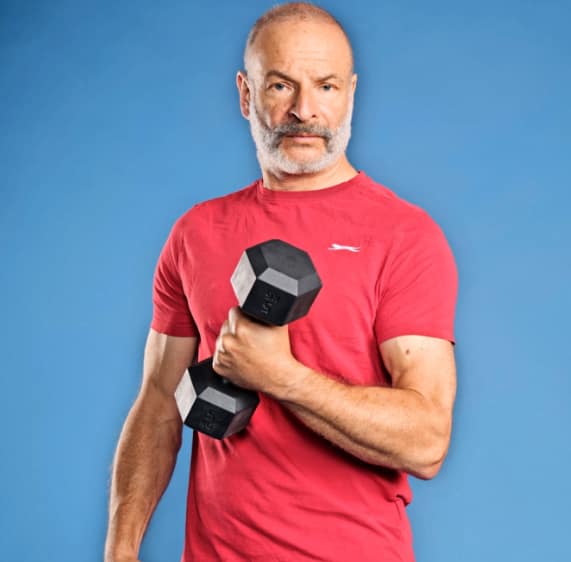
Learn how fitness for one man at 60 redefined health.
I’m Fitter in My Sixties Than I Ever Was in My Twenties
By Phil Hilton
In my twenties, I exercised to prove something. The heavy drinking, relentless gym sessions and constant need to compete all stemmed from the same place: wanting to fit in, mask insecurities and keep pace with everyone else.
At 62, my relationship with exercise couldn’t be more different. It’s no longer about ego — it’s about longevity.
Fitness has become the foundation of my life. A typical week includes weight training, boxing on the punch bag, hill sprints, pull-ups, calisthenics in the park and a very leisurely 10K around Hampstead Heath on my recovery day.
Each workout has a purpose. Strength training helps preserve muscle. Sprinting and calisthenics maintain athleticism and mobility. Running keeps my heart healthy. Every session is an investment in the years ahead.
The discipline required is greater than it was when I was younger, but the motivation has never been clearer.
Research from the US Centers for Disease Control and Prevention shows that staying active later in life can reduce the risk of dementia, depression, heart disease, stroke, type 2 diabetes and several cancers. It also strengthens bones, improves balance and lowers the risk of falls.
Those are powerful reasons to train.
Today, I’m far less interested in lifting more weight than the person next to me—someone I may never even speak to. Instead, I’m focused on something much more valuable: staying strong, independent and healthy enough to enjoy life for as long as possible.
I never become too attached to one form of exercise
I run, cycle and lift weights I divide my week into resistance training, fast athletic movement and steady cardiovascular maintenance. I want muscle mass, mobility and heart health. I don’t specialise in a single mode. There are only so many hours, so if I focus entirely on distance running, weightlifting or road cycling, I’m making it extremely hard to meet my ultimate goal, which is an all-round healthy body that will keep me independent for as long as possible.
I’m more confident in who I am now, no longer competing with the entire world. I frequently enjoy moments when it feels incredibly empowering and mood-lifting. I may have reached the age when I can finally start getting the hang of it.
Very frequent bursts make a habit
I move in some way every day. The frequency means it’s become an embedded habit and part of who I am. It’s exactly like mealtimes; I look forward to my movement as I would look forward to lunch, and my only decision is what kind of exercise I will do. I’d no more contemplate not moving than I’d consider not eating.
Being in My Sixties Doesn’t Make Me Fragile
One of the biggest misconceptions about ageing is that our bodies become too delicate to challenge.
In reality, it’s often the opposite. A sedentary lifestyle is far more likely to leave us weak, stiff and vulnerable to injury than sensible, progressive exercise.
Research shows that even people in their eighties and nineties can make remarkable gains in strength when training is properly supervised. Geriatrician Maria Fiatarone Singh, from the University of Sydney, famously demonstrated that women in their eighties could significantly improve their strength through resistance training.
Age isn’t a reason to stop moving—it’s one of the strongest reasons to start.
If you’re new to exercise or returning after a long break, begin with the guidance of a qualified trainer who can help you build confidence, develop good technique and progress safely.
Slow Progress Is Smart Progress
I’ve learned the hard way that injuries usually arrive before fitness does when ego gets involved.
Pride is a poor training partner.
Small, consistent improvements are safer, more sustainable and ultimately more effective. Learn good movement first, build gradually and resist the temptation to compare yourself with the person training next to you.
Fitness isn’t a race. The body adapts remarkably well when it’s given time.
Understanding Why Makes Training Easier
Over the years I’ve interviewed many of the world’s leading experts on exercise and longevity. The biggest lesson I’ve taken from them is that understanding why you’re exercising makes it much easier to keep going when it becomes uncomfortable.
Every workout is a conversation with your body.
When I lift weights, I’m sending the message: keep this muscle—it’s still needed. When I run or cycle, I’m asking my heart and lungs to become stronger and more efficient. The body only adapts when it’s challenged enough to realise change is necessary.
That’s why effort matters.
Knowing what’s happening beneath the surface transforms exercise from punishment into purpose. It helps you push through those moments when your mind says “stop”, because you understand that this is exactly where the body begins to respond.
Good nutrition is the foundation for staying fit, so discover helpful advice in our Diet Section.
You need to sign up or be logged in to leave a comment.